
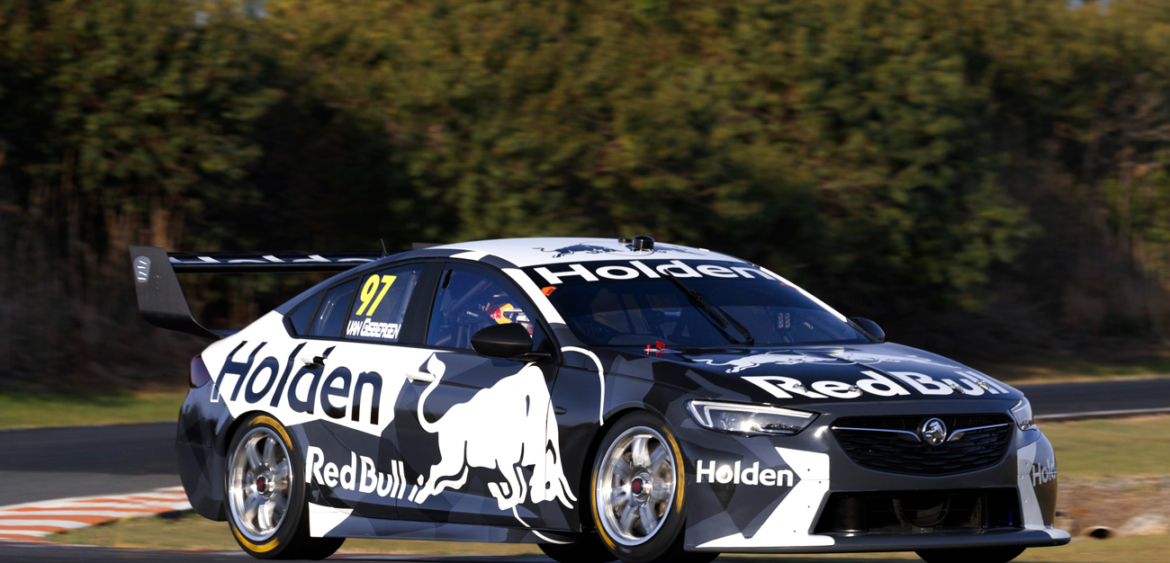

A renowned aerodynamicist has lifted the lid on what he claims was a rule-beating aero trick on the ZB Commodore Supercar.
Former Formula 1 aerodynamicist Nick Wirth has revealed that he deliberately exploited a loophole in Supercars’ VCAT homologation system while developing the aero package for the ZB Commodore.
Wirth, whose company Wirth Research was contracted by Triple Eight to assist with the ZB’s 2018 aero design, explained on The Hard Compound YouTube channel that he engineered the car to produce significantly more downforce in race trim than it did during homologation.
VCAT — a tightly controlled, runway‑based testing process used by Supercars until the end of 2023 — relied on control brake ducts to accommodate load‑measuring equipment fitted to the suspension. According to Wirth, that detail created an opportunity.
He said his team designed an aero package that would stall when the Supercars‑mandated brake ducts were fitted, ensuring the car appeared legal during VCAT. Once the race‑spec brake ducts were installed, however, the aero devices would operate normally, generating what Wirth claims was two and a half times more downforce than the homologation figures suggested.
Wirth also claimed that Triple Eight was unaware of the tactic.
“We used their own measurement system to defeat them,” Wirth said. “As soon as they put their load‑measuring equipment on, it stalled all the downforce‑producing devices. As soon as it came off, the real aero switched on.”
He added that Triple Eight’s drivers were stunned by the car’s grip when they first tested it, believing it would never pass homologation.
Despite the alleged advantage, the ZB Commodore did not win the 2018 Supercars title, with Scott McLaughlin securing the championship in the ageing FG‑X Falcon. Ford and DJR Team Penske then introduced the Gen2 Mustang in 2019, which carried McLaughlin to two more titles.
The ZB ultimately closed out the Gen2 era strongly, with Shane van Gisbergen winning back‑to‑back championships in 2021 and 2022.